


Is a UV Air Purifier for HVAC Worth the Cost?

A UV air purifier for HVAC is not a replacement for routine maintenance, a clean filter, or proper humidity control. It is a targeted indoor air quality upgrade designed to address a different concern: microbial growth inside and around the air conditioning system. For Central Florida homes and commercial properties, where cooling equipment runs hard and humidity stays high for much of the year, that distinction matters.
When installed correctly, UV light can help keep key HVAC components cleaner and support fresher airflow throughout the building. The right setup depends on your system, your indoor air quality concerns, and whether you need protection at the coil, in the moving airstream, or both.
What a UV Air Purifier for HVAC Does
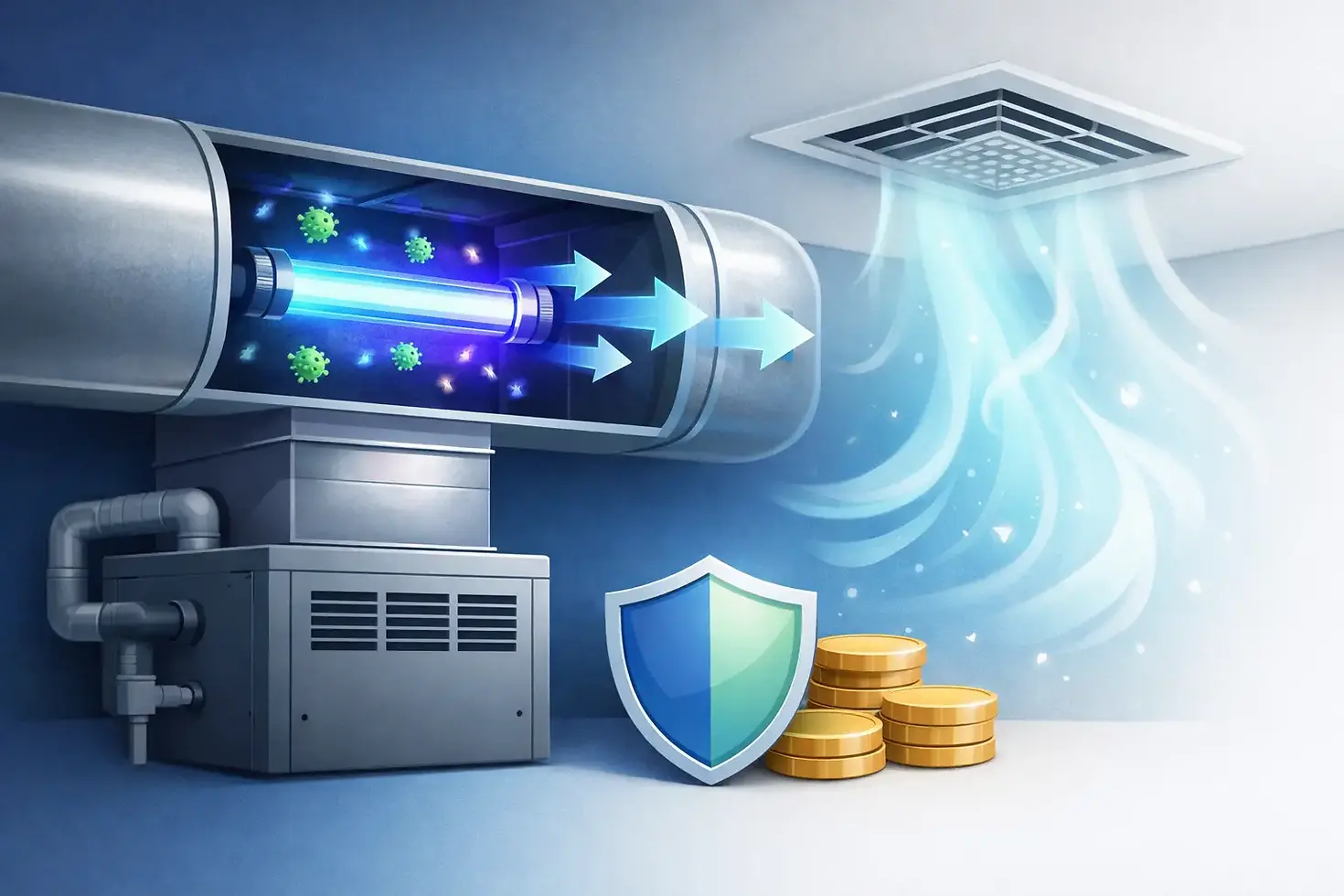
HVAC UV systems use ultraviolet-C light, often called UV-C, to disrupt the DNA or RNA of certain microorganisms. The light is installed inside the air handler, ductwork, or near the evaporator coil. As microorganisms are exposed to the light, their ability to reproduce can be reduced.
In practical terms, a UV air purifier for HVAC equipment is most often used to help control mold, mildew, and bacteria in the dark, damp areas where an air conditioner naturally creates condensation. The evaporator coil and drain pan are common trouble spots. Even a well-maintained system can develop buildup there over time, especially if drainage is restricted or indoor humidity is high.
UV equipment should not be confused with a standard air filter. Filters capture dust, pollen, pet dander, and other airborne particles. UV lights do not trap those particles. A quality filter, properly sized for the system, is still necessary for protecting equipment and improving day-to-day air quality.
Why Florida HVAC Systems Can Benefit
Your AC does more than cool the air. It also removes moisture. That moisture collects on the evaporator coil and drains through the condensate system. In Central Florida, long cooling seasons can leave those components damp for extended periods.
That environment can encourage biological growth, particularly when a system has airflow problems, an overdue filter change, poor drainage, or limited maintenance. Growth on a coil can interfere with heat transfer and contribute to odors when the system starts. A UV light aimed at the coil helps address the conditions that allow that buildup to return.
For property managers and business owners, the benefit is often consistency. Cleaner coils and drain areas can support dependable system operation, reduce musty odors, and help maintenance teams stay ahead of preventable issues. For homeowners, it can be a practical addition when family members are concerned about indoor air quality or recurring odors from the vents.
Coil Lights vs. Airstream UV Systems
Not every UV installation serves the same purpose. A technician should inspect the equipment and explain which option fits the property before recommending a system.
Coil-mounted UV lights
Coil lights are installed near the evaporator coil and typically operate continuously. Their main job is to keep the wet surfaces inside the air handler cleaner. This is often the most practical choice for Florida homes because it targets the area most likely to experience moisture-related buildup.
A coil light does not clean an already dirty coil overnight. If buildup is present, the coil should be professionally cleaned first. The UV light then helps control future microbial growth between maintenance visits.
In-duct or airstream UV lights
Airstream systems are installed where they can expose moving air to UV-C light. They may be used as part of a broader indoor air quality plan, particularly in larger homes, offices, medical spaces, or properties with specific air quality concerns.
The effectiveness of an airstream unit depends on factors such as lamp intensity, airflow speed, duct layout, and exposure time. Air moves quickly through many residential systems, so it is not reasonable to expect a single UV device to eliminate every airborne contaminant. A good contractor will set clear expectations instead of making broad promises.
What UV Lights Can and Cannot Solve
A properly selected UV system can help reduce microbial growth around indoor HVAC components and may help with odors linked to biological buildup. It can also complement regular maintenance by keeping the coil area cleaner between service visits.
It cannot correct a clogged drain line, a leaking duct, poor airflow, a failing blower motor, or oversized equipment. It also will not remove visible dust from the home, eliminate all viruses, or replace a filtration strategy. If you have persistent allergy symptoms, excessive dust, hot and cold rooms, or a musty smell, the first step should be a professional diagnosis of the HVAC system and the home conditions around it.
That diagnosis may reveal a simple solution, such as a better filter schedule, a drain treatment, duct repair, humidity adjustment, or coil cleaning. In other cases, UV may be a worthwhile part of the answer.
Signs It May Be Time to Consider UV Treatment
A UV upgrade is worth discussing when there is a clear reason for it. Recurring musty odors when the AC starts, visible growth around the indoor unit, repeated coil or drain pan buildup, and heavy humidity are all common reasons to ask about it.
It may also make sense after a system replacement. Installing UV protection while the air handler is accessible can be more efficient than adding it later, and it gives the new coil a cleaner starting point. Commercial properties with long operating hours may see particular value because the equipment is exposed to moisture and airflow for more hours each day.
If odors are sudden or unusually strong, do not assume a UV light is the fix. Standing water, a blocked drain, dirty ductwork, electrical issues, or another equipment problem may need immediate attention.
Professional Installation Matters
UV-C lamps are not a do-it-yourself accessory to place anywhere inside an HVAC system. Placement affects performance, and direct exposure can damage certain plastics, wire insulation, and non-UV-rated components. The installer must also protect access panels and ensure the light cannot be viewed accidentally during service.
A professional installation includes choosing equipment that fits the system, mounting it in the correct location, confirming electrical connections, and checking that the air handler and drain system are in good condition. The technician should also explain lamp replacement requirements. Most UV lamps need periodic replacement because light output declines over time, even when the lamp still appears to be working.
At R&A AC Co., recommendations should begin with the condition of your equipment, not a one-size-fits-all upgrade. A thorough inspection can determine whether UV treatment, filtration changes, coil cleaning, or humidity control will deliver the most useful result for your property.
UV Air Purifiers Work Best With Basic HVAC Care
The strongest indoor air quality plan starts with fundamentals. Keep filters changed on schedule, maintain clear condensate drainage, have the system serviced regularly, and address moisture problems promptly. UV light can strengthen that plan, but it performs best when the HVAC system is already operating as it should.
For a home with a clean coil and normal humidity, a UV light may be a preventive upgrade rather than an urgent need. For a property with recurring biological buildup or odor concerns, it may provide meaningful long-term support. The difference comes down to the source of the problem.
A quick inspection can give you a clear answer. If your air conditioner has a recurring odor, drainage issue, or coil-cleanliness concern, ask an experienced HVAC technician to evaluate the full system before choosing an indoor air quality product. The best solution is the one that keeps your equipment clean, your airflow steady, and your space comfortable when Florida heat puts the system to work.


Comments